Solar Lighting for Nigeria and West Africa: Beyond the Generator
Every litre of diesel your client burns lighting their compound after dark is margin going up in smoke. Solar outdoor lighting doesn't fix the grid — it makes the generator irrelevant for the lighting load entirely.
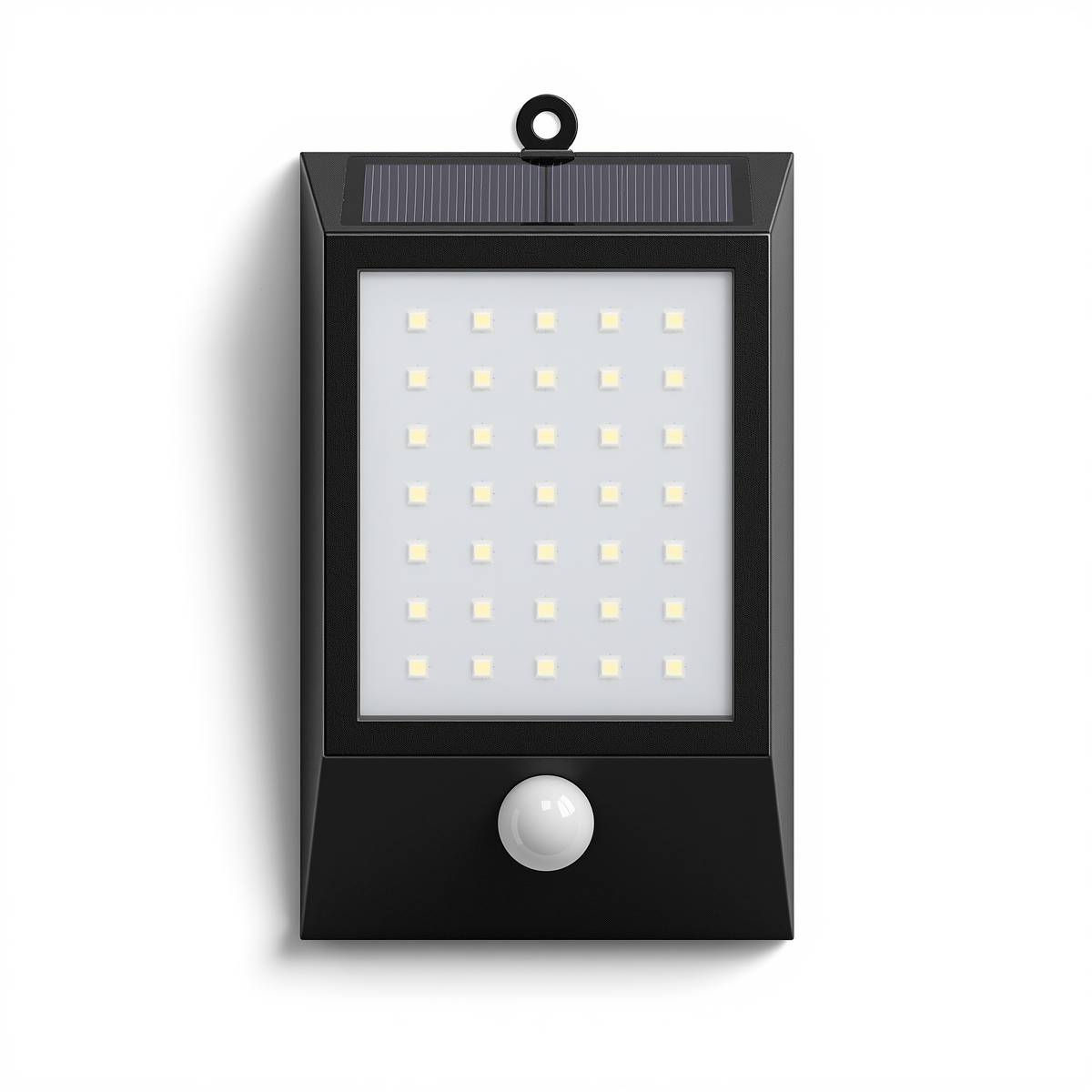
In Nigeria, running a business or a compound after dark has always meant the same calculation: fill the generator tank, start the engine, keep it running until people go to sleep. Fuel costs rise. The generator needs servicing. The noise is constant. And the lighting — attached to a machine that costs money every hour it runs — is always the first thing turned down to save fuel. Solar outdoor lighting breaks that equation completely: charge during the day on free sunlight, light the compound all night, and send the generator a smaller bill or none at all.
1. The generator is the problem — not just the power cut
South Africa worries about load-shedding because it lost reliable power. Nigeria and much of West Africa never built their business models around reliable grid power in the first place. The generator is the grid — it has been for decades. The problem is not that the lights go out when NEPA cuts; the problem is that running those lights on diesel is an operating cost that compounds month after month.
Solar security and street lights eliminate that cost for the outdoor lighting load. A compound gate light, a perimeter floodlight, a car park luminaire, a road light for an estate — none of these needs to run on diesel. They can charge from the sun and run for free, every night, for years.
2. Security: darkness is expensive in Lagos, Accra and beyond
Across Nigeria, Ghana, Ivory Coast and the wider West African market, perimeter security is not optional for any serious commercial or residential property. A dark compound at night is a risk — to stock, to equipment, and to the people inside. The irony is that the generator-powered lighting that protects the property is also the most expensive-to-run part of the operation.
Solar security floodlights with PIR motion sensors solve both problems: the perimeter stays lit on stored sunlight, the motion trigger activates full output when anything moves, and the fuel bill for that part of the operation drops to zero. For distributors serving commercial compounds, housing estates, filling stations and warehouses, this is the proposition that closes the conversation quickly.
3. Estate roads and community lighting: the municipal gap
Municipal street lighting in many Nigerian cities and towns is unreliable, poorly maintained, or simply absent in newer developments. Private estates, gated communities, industrial parks and rural roads either wait years for public lighting or fund it themselves. In that context, solar street lights are not a premium option — they are the practical one. No grid extension, no trenching, no utility to negotiate with. The estate developer or community association installs the poles, bolts on the all-in-one units, and the road is lit from that night forward.
4. Specify for West African heat: why the battery chemistry is non-negotiable
Lagos averages over 27°C year-round and regularly hits 33–35°C. Kano, Abuja, Accra, Lomé — all hot. A solar light housing mounted on a pole in direct West African sun can reach temperatures well above ambient. Cheap lithium-ion batteries degrade rapidly under sustained heat: capacity falls, runtime shortens, and within 18 months the light that should run until 6am is shutting off at midnight.
LiFePO4 (lithium iron phosphate) is the only battery chemistry worth specifying for West Africa. It tolerates heat, delivers 2,000+ charge cycles, and holds capacity across the product's full design life. The upfront unit cost is higher — the five-year maintenance cost is dramatically lower. For a distributor whose clients will call if the light fails early, LiFePO4 is the spec that protects the relationship.
5. IP66 for dust, humidity and tropical rain
The Harmattan brings dust across West Africa from November to March. The rainy season brings sustained heavy rain. Coastal locations — Lagos, Port Harcourt, Accra — add salt air. A luminaire rated only IP65 in these conditions is adequate for sheltered wall positions; for poles, perimeter fences and road installations, IP66 is the minimum that keeps water and dust out across the seasons. Here's the practical difference between IP65 and IP66.
6. What to confirm before placing an order
The spec conversations that save a return shipment happen before the order is placed, not after the lights arrive. For West African projects, confirm all of the following in writing:
- Battery chemistry: LiFePO4 explicitly — not "lithium" or "li-ion" or "high-capacity battery"
- Autonomy: 2–3 nights at operating output, stated clearly in the datasheet
- Operating temperature: rated to at least +50°C — confirm it covers the install environment
- IP rating: IP65 for sheltered positions, IP66 for exposed poles and perimeters
- Sensor type: PIR for security triggering; radar for road and estate lighting where smooth dimming between vehicles is needed
- Certifications: CE + RoHS for clean customs clearance at Lagos, Apapa, Tema or Cotonou
A supplier who pushes back on any of these questions before the order is placed will be harder to reach after the container is on the water.