IP65 vs IP66 vs IP67: A Buyer's Guide
The wrong IP rating fails in months. Here's exactly what each number means for your install environment.
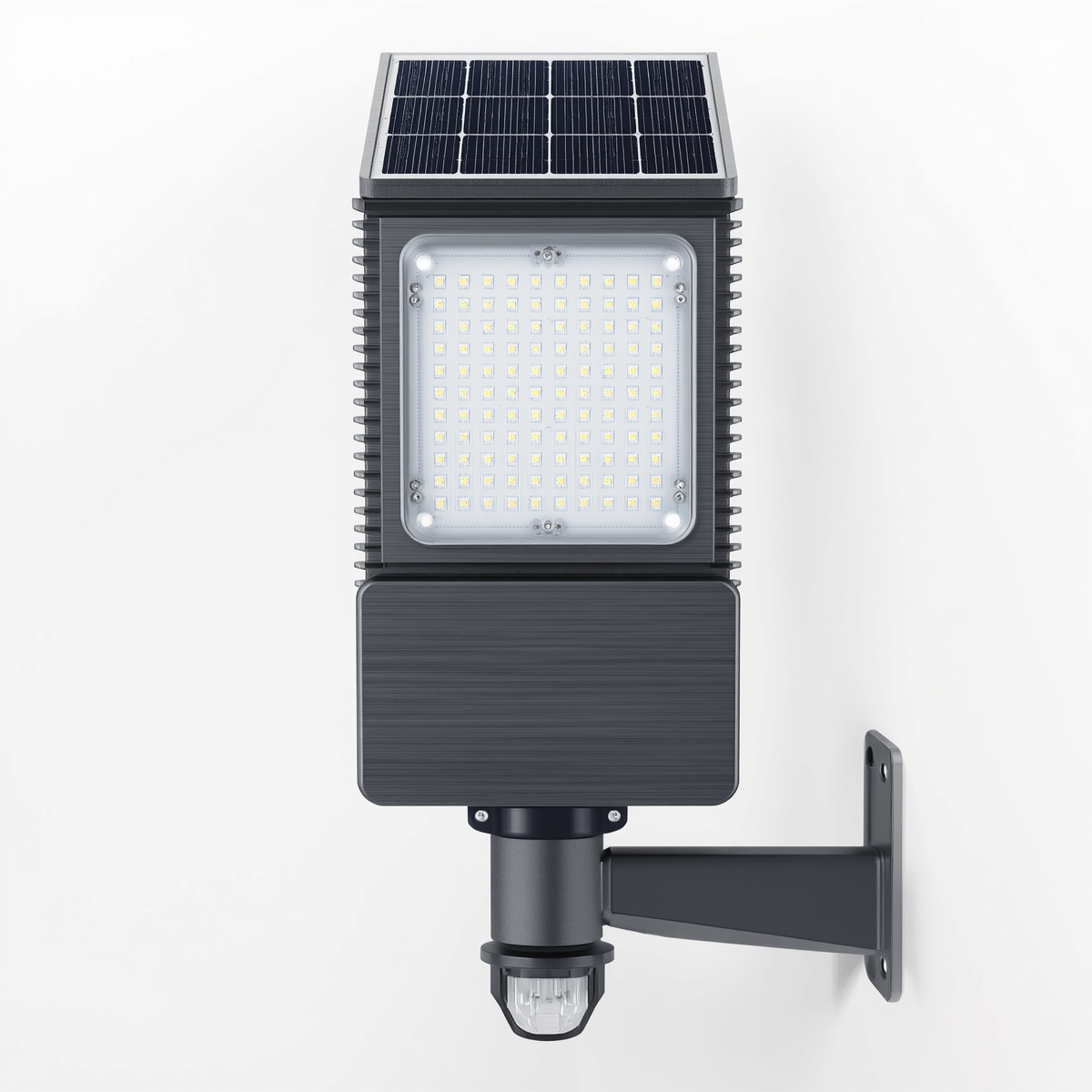
The fixture that failed was rated IP65 and installed on a coastal wall 200 metres from the ocean. The gasket dried out, water got into the housing, and the LED board corroded. The replacement should have been IP67 minimum. The cost difference between the two: marginal. The cost of the failure: a warranty claim, a site visit, and a customer who won't reorder. The IP code is where that difference lives — here's how to read it.
What Does IP Rating Actually Mean?
IP stands for Ingress Protection, defined by international standard IEC 60529. Every IP rating has two digits. The first digit (0–6) rates protection against solid particles — dust, sand, debris. The second digit (0–9K) rates protection against liquids — dripping water, rain, jets, or full submersion.
For outdoor solar lighting, the first digit is almost always 6, meaning the enclosure is completely dust-tight. This is not negotiable for any fixture installed outdoors. The real purchasing decision is the second digit.
IP65, IP66, IP67 — The Differences That Matter
| Rating | Water Protection | Test Condition | Typical Use |
|---|---|---|---|
| IP65 | Low-pressure water jets from any direction | 6.3 mm nozzle, 12.5 L/min, 3 min | Garden lights, wall lights, sheltered porches |
| IP66 | High-pressure water jets from any direction | 12.5 mm nozzle, 100 L/min, 3 min | Security floodlights, street lights, industrial |
| IP67 | Temporary submersion up to 1 m depth | 1 m water, 30 minutes | Pool perimeters, deck lights, ground-flush fixtures |
When to Specify Each Rating
IP65 — Standard Outdoor Environments
IP65 is appropriate for most garden, path, and wall installations where rain is the primary water exposure. Think bollard lights along a paved driveway, solar stake lights in a flower bed, or a decorative wall lantern under a porch overhang. What IP65 cannot handle: sustained high-pressure water, coastal salt spray over multiple seasons, or any risk of standing water reaching the housing.
IP66 — Commercial, Industrial, and Security Applications
IP66 is the minimum specification for any fixture that might be pressure-washed, exposed to agricultural spray equipment, or installed on a building facade in a storm-prone coastal region. Security floodlights and solar street lights are routinely certified to IP66 because they face both heavy rain and, in commercial settings, occasional wash-down cycles. If you are sourcing for a warehouse, a livestock facility, a petrol station forecourt, or a public road — IP66 is the floor, not the ceiling.
IP67 — Water Contact and Flood-Prone Zones
IP67 guarantees the fixture survives being submerged to 1 metre for 30 minutes. This matters for ground-mounted uplights where heavy rainfall can pool, for deck step lights on a boat dock, or for pool perimeter fixtures where splash and occasional flooding is expected. Premium solar garden spike spotlights and deck step lights are commonly rated IP67 for exactly these scenarios.
What About IP68?
IP68 means permanent submersion at a depth specified by the manufacturer — typically beyond 1 metre. Underwater pool lights and submersible pond fixtures use IP68. For the vast majority of outdoor solar lighting applications, IP67 is the practical ceiling — IP68 adds cost without benefit unless the fixture is genuinely going to spend extended time underwater.
The Coastal Installation Problem
Coastal and near-coastal environments expose fixtures to a combination of salt-laden air, driving rain, and humidity cycling that accelerates gasket degradation faster than the IEC test conditions account for. The IEC test is performed with clean fresh water. Real coastal exposure is more aggressive.
Our recommendation for installations within 5 km of the ocean: IP66 minimum for wall and security fixtures; IP67 for anything ground-mounted or at risk of flooding. Additionally, check the fixture material — marine-grade aluminium alloy with a powder-coated or anodised finish holds up significantly better than plastic housings, regardless of IP rating. The gasket and housing material are equally important to the rating number itself.
IP Rating vs. Material Quality — Both Matter
An IP rating tells you how the fixture performed in a controlled laboratory test. It does not guarantee long-term durability in the field, because material quality determines how long the IP protection lasts. A low-cost fixture might pass the IP66 test on day one with a fresh gasket, but degrade within 18 months under UV exposure, temperature cycling, and salt air. When comparing suppliers, ask not just for the IP rating certificate but for information on the gasket material (silicone outlasts EPDM in tropical heat) and the housing material (die-cast aluminium vs. ABS plastic).
Frequently Asked Questions
- Can an IP65 light be used outdoors in a rainy climate?
- Yes — IP65 is rated for outdoor rain exposure. The concern is sustained high-pressure water (pressure washers, heavy driving storms) and coastal salt air, not ordinary rainfall.
- Is IP66 overkill for a residential garden?
- In most cases, yes. IP65 is adequate for sheltered garden and path lights. IP66 adds cost without practical benefit unless you are in a storm-prone coastal area or regularly pressure-wash your property.
- Why do security floodlights typically ship at IP66 rather than IP65?
- Security floodlights are often installed in exposed locations — on perimeter walls, under eaves, on poles — where driving rain hits them at high angles and with some force. IP66 provides a margin of safety for these environments and for commercial projects that may involve cleaning with pressurised hoses.
- Do I need IP67 for a solar light mounted near a swimming pool?
- Yes, if there is any realistic chance the fixture will be splashed with pool water, temporarily submerged in a heavy flood event, or installed at ground level where water pools. IP67 is also recommended for any inground or ground-flush luminaire.