Solar Lighting for Colombia and Ecuador: Apagones and Off-Grid Security
In Colombia and Ecuador, power cuts are not a rare event — they are a scheduled part of the week. When the grid cuts out, every mains-powered security light goes dark at exactly the moment it should be on. Solar doesn't have that problem.
The distributor in Bogotá knows the call: a residential compound went dark during a cut, and something happened at the gate while the grid lights were off. The security cameras caught nothing because the lights weren't working. The client wants to know why their lighting failed during an outage. The answer is simple — grid-tied lighting fails when the grid fails. In Colombia and Ecuador, that happens often enough to be a documented commercial problem, and the solution is solar.
1. Apagones: the market driver that isn't going away
Colombia's power grid is heavily dependent on hydroelectric generation. During El Niño dry seasons — which recur every few years and have been intensifying — reservoir levels drop and the system moves into programmed rationing. Urban areas experience scheduled cuts of 4–8 hours per day in affected zones; rural and peri-urban areas face longer interruptions. In Ecuador, similar dynamics drive cuts in Guayaquil, Quito and the sierra during drought years, with residential and commercial customers bearing the load reduction directly.
For lighting distributors and security equipment wholesalers in both countries, this creates a clear and growing demand. Buyers are no longer asking "is solar reliable enough?" — they are asking "which solar spec works best for my apagón schedule?" The conversation has moved from evaluation to specification.
2. Security lighting fails exactly when it's needed most
The perverse reality of grid security lighting in an apagón market is that it goes dark precisely when intrusion risk is highest. Thieves and opportunists operate during power cuts because they know which properties will be dark. A home or business with a mains floodlight has zero protection during the cut — and that can be the same 6-hour window every weekday.
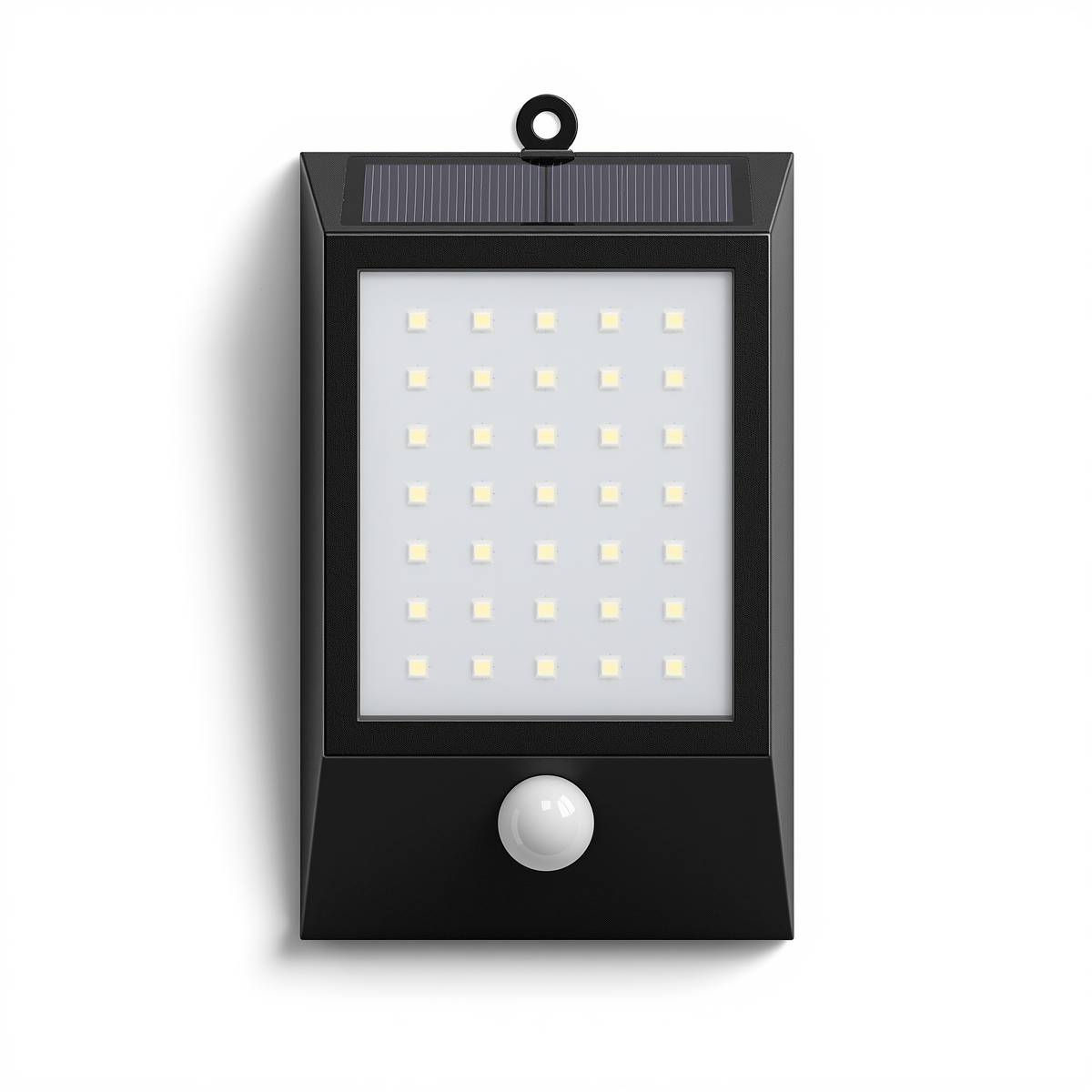
A solar security light draws nothing from the grid. The 3-head solar motion flood light and the PIR motion sensor wall light charge from sunlight during the day and run entirely on stored battery power at night — no Enel, no ENAP, no EEQ dependency. An apagón is simply irrelevant to how the light operates. For buyers who have experienced grid security failure during a cut, this is the product conversation that closes quickly.
3. Electricity costs and the ROI case
Beyond the apagón argument, electricity costs in both countries have been rising steadily. Colombian and Ecuadorian residential tariffs vary by region and usage tier but have trended higher as grid infrastructure ages and energy costs rise globally. For commercial buyers — shopping centres, industrial compounds, gated estates — the cumulative cost of running perimeter security lighting on the grid is a meaningful line item over a five-year horizon.
A solar flood light installed at the gate or perimeter has a running cost of zero for its entire service life. The total cost of ownership comparison between solar and grid lighting typically favours solar on a five-to-seven-year horizon when electricity cost and maintenance are included — and that analysis grows more favourable as tariffs rise. For buyers who think in project ROI terms, this is the second argument after the apagón case.
4. Tropical climate: why LiFePO4 is non-negotiable
Coastal Ecuador — Guayaquil, Manta, Esmeraldas — runs hot and humid year-round, with high UV exposure. The Colombian Pacific coast and the Llanos similarly combine heat with humidity. Standard lithium-ion battery cells begin to degrade measurably above 40–45°C, and a fixture mounted on a west-facing wall in Guayaquil can reach those temperatures on the battery housing during a summer afternoon.
LiFePO4 (lithium iron phosphate) chemistry is thermally stable to +60°C and delivers 2,000+ charge cycles regardless of ambient temperature. For the tropical and subtropical markets of coastal and low-altitude Colombia and Ecuador, LiFePO4 is the only battery specification worth sourcing. A distributor who sells a Li-ion product in these climates will be fielding warranty claims within eighteen months. Ask the supplier explicitly: "LiFePO4 or standard Li-ion?" — the answer matters.
The Andean highlands — Bogotá (2,600m), Quito (2,850m) — are cooler, with nighttime temperatures sometimes approaching 5–10°C in winter. LiFePO4 handles cold far better than lead-acid and better than standard Li-ion, making it the right choice for the full Colombian and Ecuadorian altitude range.
5. The B2B opportunity: who is buying
In Colombia and Ecuador, the buyers who move solar security lighting in volume are:
- Building materials distributors (Homecenter, Maestro, independent ferreterías): security and garden lighting is an established category, and solar is replacing grid products in the range as customers request apagón-proof options
- Security equipment wholesalers: bundling solar lights with alarm systems and CCTV for residential and commercial clients seeking complete apagón-resilient security
- Gated community developers: specifying solar perimeter and path lighting for urbanizaciones where grid connection costs and ongoing bills reduce project margins
- Import traders (importadores): sourcing directly from China for private-label brands or resale through online and retail channels
For all of these channels, the apagón argument is the opening conversation, and the LiFePO4 spec and CE + RoHS certification are what close the sourcing discussion.
6. What to confirm before placing an order
For buyers sourcing solar security lighting for the Colombian and Ecuadorian market, these six questions separate a reliable order from a problem one:
- Battery chemistry: LiFePO4 explicitly — verify in the datasheet, not just the product title
- Autonomy: how many nights does it run without a full recharge? For apagón markets where the cut can happen any night, 2–3 nights autonomy is the right minimum
- IP rating: IP65 minimum for all outdoor fixtures; IP66 for exposed or coastal positions
- Operating temperature: rated to at least +50°C for coastal and lowland sites
- PIR sensor range: for residential walls and gates, 8–12 m range covers typical Colombian and Ecuadorian residential perimeters
- Certifications: CE + RoHS — accepted by commercial buyers and required for customs clearance at Colombian and Ecuadorian ports
A supplier confident in their product will answer all six without hesitation, and will send test reports with the quotation rather than after the order is placed.