Solar Lighting for Australia: Off-Grid, Farms and Coastal Properties
Australia's grid is reliable — but expensive, and often nowhere near where you actually need the light. That combination, plus extreme heat and coastal salt air, makes solar the practical default for a growing share of Australian lighting projects.
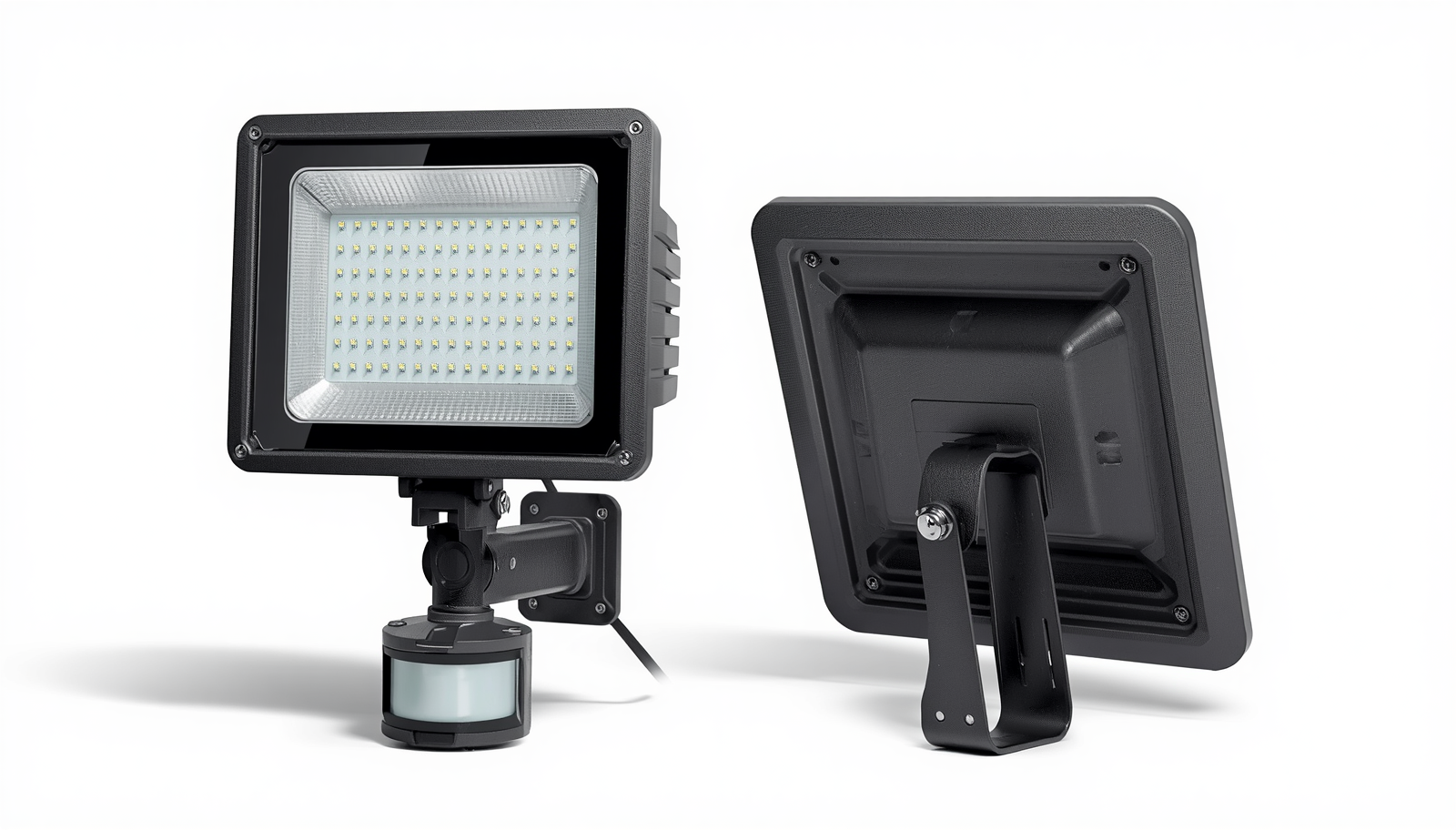
Unlike South Africa or Nigeria, the Australian grid isn't unreliable — it keeps the lights on. The solar lighting case here is different: it's about the electricity bill, the distance to the nearest power point, and the salt air that corrodes a standard fixture inside eighteen months. Three separate reasons, three different buyer types, and three distinct specs. Here's how to read the market.
1. Electricity costs — the ROI case that sells itself
Australian residential and commercial electricity is among the most expensive in the developed world — averaging AU$0.28–0.35 per kWh for households and higher for commercial accounts. For a distributor selling into the suburban and peri-urban market, the ROI conversation is simple: a solar security light or path fixture installed today has an electricity running cost of zero for its entire life. At AU$0.30/kWh, a modest 10W fitting running dusk-to-dawn recovers its price difference from a grid alternative in roughly two to three years, after which it operates free.
For commercial buyers — car parks, shopping centres, industrial precincts — the maths is even more compelling. A row of solar street lights on a car park perimeter costs nothing to run, carries no grid connection fee and requires no licensed electrical contractor to install. The ten-year TCO comparison reliably favours solar on any site where trenching and connection costs are significant.
2. Off-grid farms and remote properties — no grid to connect to
Australia is a large country and a lot of it is not connected to the grid at all. Farms across the Kimberley, the Pilbara, Cape York and outback South Australia have their own generation — diesel gensets, small solar arrays, or a combination. For these properties, solar security lighting and path lighting are not a choice but the only practical option: connecting a perimeter security light to the grid means running cable from the main supply, which could be hundreds of metres away.
The most common products for this application are standalone solar security floodlights — multi-head motion floods covering gates, sheds and outbuildings from a single pole — and high-output solar floods rated for industrial environments. Key requirements: IP66 (farm environments involve dust, vehicle wash-down and driving rain), PIR sensor range of at least 10 metres, and a battery rated to handle the temperature swings between desert nights and afternoon highs above 40°C.
Distributors serving the rural supply channel — rural merchandise stores, agricultural suppliers — tend to find these products move fastest in pre-summer and post-shearing periods when property owners are investing in infrastructure.
3. Coastal properties — why standard IP65 fixtures fail
Australia has a disproportionately long coastline relative to its population, and a large share of the premium residential market sits within a few kilometres of the ocean. Salt-laden air is exceptionally aggressive on outdoor fittings: a housing that would last ten years inland corrodes visibly within two years on a coastal wall, and the gaskets that give a fixture its IP rating degrade at an accelerated rate under UV plus salt cycling.
The practical minimum for any fixture installed within 5 km of the Australian coast is IP66 for security and wall-mounted lights, and IP67 with marine-grade 316 stainless steel for deck, step and ground-level fixtures. The difference between 304 and 316 stainless is measurable on a coastal installation within the first two years — 316 contains molybdenum, which resists the chloride attack that pits 304 within months near the water. Here's how the IP ratings compare in practice.
Buyers in the coastal premium residential and hospitality segment — waterfront villas, resort pools, marina precincts — are willing to pay for the right spec because they have already paid the cost of getting it wrong.
4. Temperature: why LiFePO4 matters under Australian conditions
Far North Queensland, the Pilbara and the Top End regularly exceed 40°C in summer, and a solar fixture housing in direct afternoon sun can reach significantly higher. Standard lithium-ion battery chemistry begins to degrade at sustained temperatures above 40–45°C — the cells lose capacity, and after two or three Australian summers, the light that was supposed to run until dawn starts shutting off at midnight.
LiFePO4 (lithium iron phosphate) chemistry is thermally stable to +60°C and delivers 2,000+ charge cycles regardless of ambient temperature. For any product headed into northern Australia or any location where the housing will be in direct sun, LiFePO4 is the only specification worth quoting. Verify the chemistry explicitly in the datasheet — a listing that says "lithium battery" without specifying the type is almost always standard Li-ion.
The cold end is also worth checking: highland regions of Victoria, Tasmania and the Snowy Mountains see genuine winter cold. Our security range is rated to −20°C, which covers every Australian installation environment. How solar lights handle cold and overcast conditions →
5. Certifications — CE and the Australian market
CE marking is a European declaration of conformity and is not a legal requirement for sale in Australia, where the relevant standard is RCM (Regulatory Compliance Mark, formerly C-Tick/A-Tick). However, CE certification — particularly to the Low Voltage Directive and EMC Directive — uses test methods that substantially overlap with AS/NZS requirements, and CE test reports are widely accepted by Australian commercial buyers as evidence of quality and safety compliance for B2B wholesale purposes.
For residential retail or for tender supply to government bodies, your Australian buyer will need to confirm their specific compliance pathway. For the B2B wholesale channel, CE + RoHS provides a solid compliance foundation and is standard on JC Lightning's full range. Certificates are provided with every quotation.
6. What to check before placing an order
For Australian buyers, these are the specification questions that prevent a return shipment or a disappointed end customer:
- Battery chemistry: LiFePO4 explicitly — not "lithium" or "18650 lithium" without the chemistry stated
- Operating temperature range: should cover at least −10°C to +50°C for mainland applications; +60°C tolerance is preferable for northern Australia
- IP rating matched to environment: IP65 for inland sheltered positions; IP66 for exposed farm and industrial; IP67 + 316SS for coastal and ground-level
- Autonomy for southern Australia winters: specify 2–3 nights for Victoria, Tasmania and SA where overcast winter spells are common
- Certifications: CE + RoHS test reports available before order; confirm the compliance pathway with your buyer for retail or government supply
- Sensor type: PIR for security perimeter; radar for car parks, estate roads and large open areas where range and smooth dimming matter
A supplier who can answer all six of these before the order is placed is a supplier worth working with. One who can only confirm the lumen count and the price is not.