Load-Shedding Survival Guide for South Africa
Stage 6 cuts mean 12+ hours daily without power. Solar security lighting is no longer optional — here's what to stock.
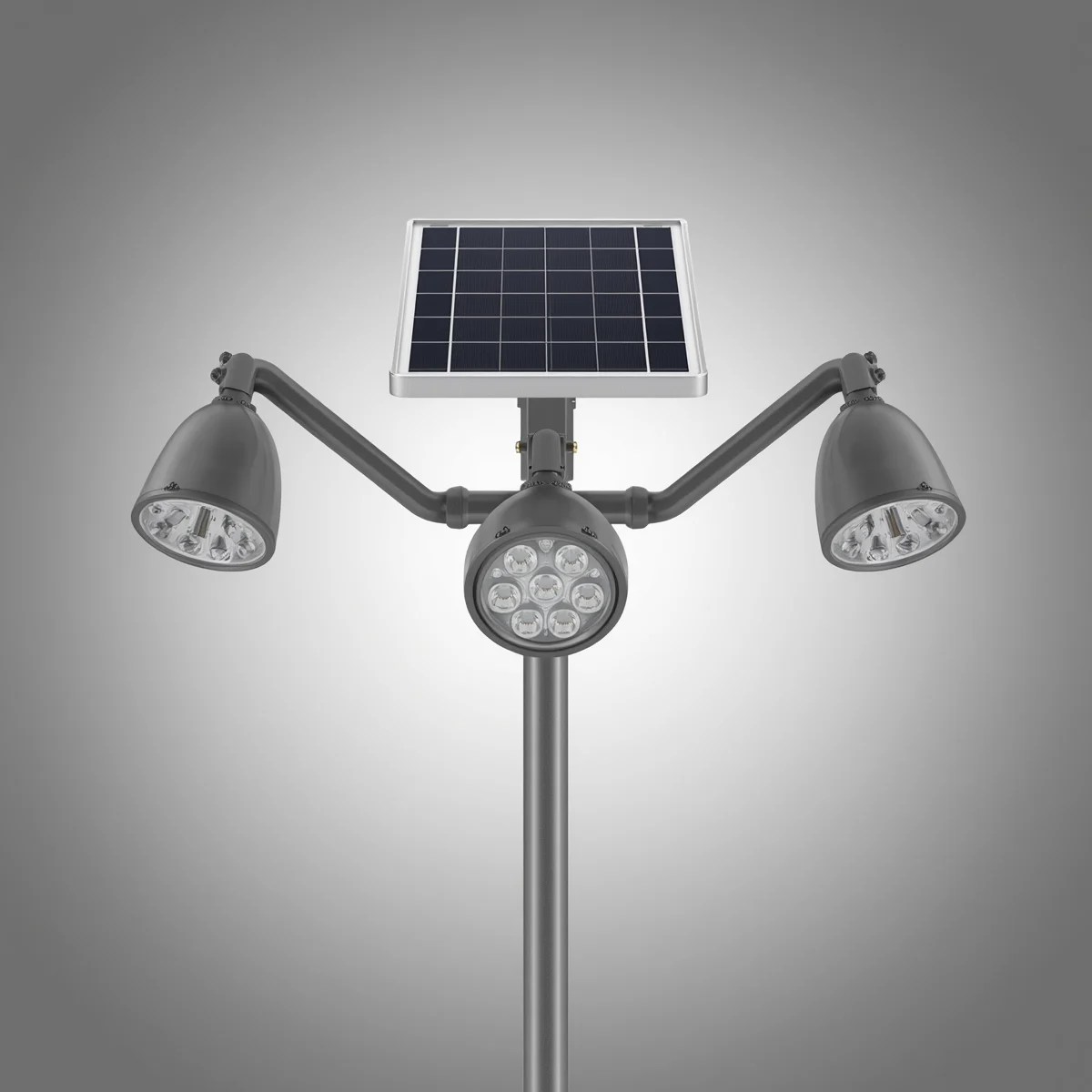
South Africa's load-shedding crisis has fundamentally changed the security lighting market. Eskom's rolling outages — currently averaging 6–8 hours daily, peaking at Stage 6 (12+ hours) — leave homes, businesses, and farms in darkness exactly when intruders are most active.
Traditional grid-tied lighting fails completely during a cut. UPS-backed systems last 30–60 minutes — not enough for a 4-hour outage. Generators are expensive, noisy, and do not solve perimeter lighting. Solar security lighting solves this structurally: each fixture is its own off-grid system. It does not know or care that the grid is down.
Understanding Load-Shedding Stages
Eskom's load-shedding is implemented in eight stages, each doubling the outage frequency and duration from Stage 1:
| Stage | Daily outage hours (approx.) | Lighting implication |
|---|---|---|
| Stage 1–2 | 2–4 hours | Evening blackouts, UPS may cover |
| Stage 3–4 | 4–8 hours | UPS insufficient; perimeter dark for hours |
| Stage 5–6 | 8–12 hours | Multiple cuts per day; full night coverage required |
| Stage 7–8 | 12–16 hours | Solar is the only viable security lighting solution |
From Stage 3 upward, UPS backup becomes inadequate for perimeter and street lighting. Solar fixtures — charged during the day, independent of the grid at night — are the only category that performs identically at Stage 1 and Stage 8.
Why Grid-Tied Alternatives Fall Short
UPS / battery backup: Sufficient for a desk lamp or router. A 150W security floodlight draws down a typical 1kWh UPS in under 90 minutes. A Stage 6 outage block lasts 2.5–4 hours minimum.
Diesel generator: Viable for essential loads but impractical for perimeter lighting. Fuel cost, noise, maintenance, and the security risk of a running generator make it unsuitable for most residential and light commercial sites.
Grid-tied LED: Works when power is on, fails the moment load-shedding begins. No storage, no independence.
Product Selection Guide for the SA Market
South African buyers need fixtures specced for three realities: high ambient temperatures (30–40°C in summer), demanding security requirements, and enough battery autonomy to cover the longest expected outage block.
Perimeter and Gate Security
PIR motion-sensor floodlights rated 1,500–2,500 lumens are the core product for residential and light commercial perimeters. Specify PIR range of 8–12m and PIR angle of at least 120°. Battery capacity should cover a minimum of 12 hours in dim standby mode with bright-on-motion bursts. LiFePO4 is essential — SA summer temperatures rule out standard Li-ion for anything expected to last beyond 2 years.
Driveways and Access Roads
All-in-one solar street lights in the 100–200W range cover driveways, access roads, and small parking areas with no trenching or electrical installation. Radar sensor models (rather than PIR) work better for vehicle detection at the entry speed common in South African driveways. Look for IP66 and an operating temperature rating down to –5°C for Highveld winter nights.
Entrances, Pathways, and Stoeps
Solar wall sconces rated 600–1,000 lumens suit covered entrances, gate pillars, and pathway edge lighting. Models with both dusk-to-dawn dim mode and motion-triggered bright mode maximise battery life across long Stage 6 nights. Aluminium housing handles the temperature cycling better than plastic in SA conditions.
Commercial and Estate Applications
For gated estates, smallholdings, warehouses, and retail parks, commercial-grade all-in-one street lights (200–300W) with radar detection and LiFePO4 packs sized for 3+ cloudy days of autonomy provide the level of reliability that estate managers and security companies demand.
Minimum Spec Checklist for SA Distributors
- Battery chemistry: LiFePO4 only — heat tolerance is non-negotiable above the Limpopo line
- IP rating: IP65 minimum for wall/garden; IP66 for street lights and commercial floodlights
- PIR range: 8–12m for residential security; radar sensor for vehicle detection
- Battery autonomy: 12h+ at dim mode with burst-on-motion to handle Stage 6 worst case
- Operating temperature: rated to at least +60°C for SA summer roof/wall conditions
- Certification: CE and RoHS at minimum; SABS or SONCAP available for import documentation
Frequently Asked Questions
- Will solar lights charge enough on a South African winter day?
- Most of South Africa receives 4.5–6 peak sun hours even in winter, which is sufficient for a correctly sized fixture to charge fully. Specify fixtures where the panel wattage is at least 2× the battery's Wh capacity to ensure full charge on shorter winter days.
- Do solar lights work during the Highveld storm season?
- Yes, within limits. LiFePO4 battery models with 3–5 days of reserve capacity continue to operate normally through a series of overcast days. In the Highveld thunderstorm season (November–February), fixtures with larger battery packs — rather than panel-matched minimum spec — provide a reliability buffer.
- What documentation is needed to import solar lights into South Africa?
- CE and RoHS certificates are accepted for most solar lighting imports. For large commercial volumes, SONCAP certification facilitates smoother customs clearance. Your supplier should provide a commercial invoice, packing list, bill of lading, and CE certificates as standard export documentation.