Solar vs Grid Street Lights: Total Cost of Ownership
On the day you buy, a grid street light looks cheaper. Over ten years that comparison usually flips — because the sticker price is only the first of six costs, and the grid keeps billing long after a solar fixture has stopped costing anything.
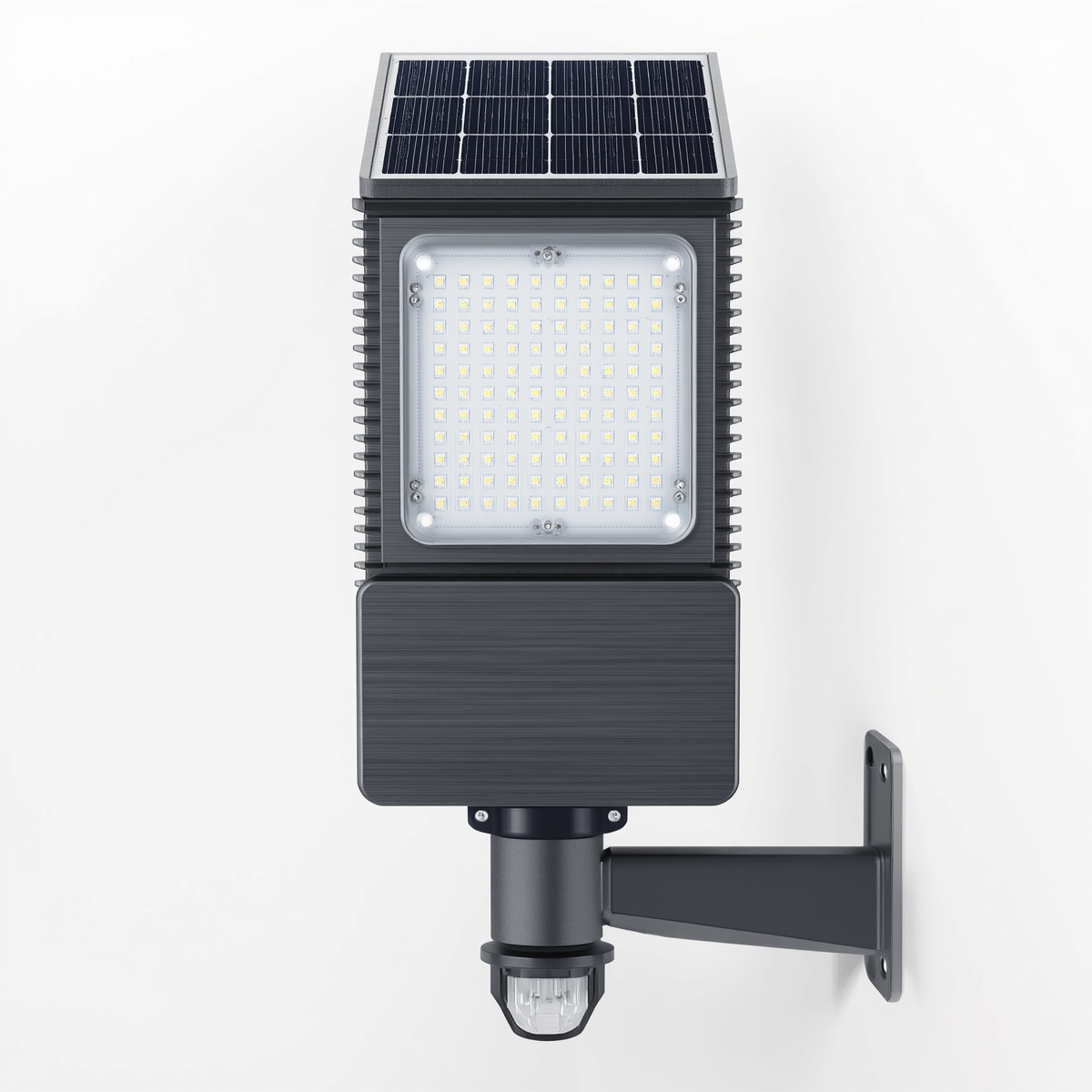
The procurement manager who bought grid street lights for a 4km road in 2019 was back at the supplier in 2022 — not because the lights failed, but because the cables were stolen and the repair cost more than the original install. The one who specified solar for the same length of road in the same year has never been back: no cable to steal, no electricity bill, no call from the utility. That's the ten-year picture the sticker price doesn't show. Here's how to compare the two options honestly for a road, estate or municipal project.
1. The sticker price hides the install
A grid street light needs far more than the luminaire. Lighting a road from the grid means trenching along its length, laying armoured cable, setting feeder pillars, and often paying the utility for a new connection or grid extension — costs that scale with distance and can dwarf the fixtures on long or remote runs. A solar street light arrives as a single unit that bolts to a pole: no trenching, no cabling, no connection fee. The further apart your poles and the further from the grid, the wider this gap.
2. The grid keeps sending a bill; solar doesn't
After install, a grid system runs two meters forever: the electricity it burns every night, and the network charges and maintenance the utility passes on. A solar street light runs on free sunlight — its "fuel" cost is zero for its whole life. Over a ten-year horizon, recurring electricity is often the single largest line in a grid system's TCO, and it only grows as tariffs rise.
3. Don't forget cable theft and outages
In many markets the grid carries two costs that rarely reach the spreadsheet. Copper cable theft can darken a stretch of road overnight and cost more to repair than the original install — solar fixtures have no buried copper to steal. And every outage or bout of load-shedding leaves the street dark, which is a safety and liability cost; a solar light with battery autonomy keeps working straight through the blackout.
4. Where solar carries its own costs
Solar isn't free of TCO. The unit costs more upfront than a bare grid luminaire, and the battery is a wear item — though a quality LiFePO4 pack lasts far longer than cheap lithium-ion, pushing replacement years out rather than seasons. Budget for one eventual battery swap, choose fixtures where the battery is serviceable, and the rest of the system — panel, LED and controller — typically outlives it.
5. When solar wins — and when grid still makes sense
Solar's TCO advantage is largest on long or remote runs where trenching and grid extension are expensive; in areas with unreliable power or load-shedding, where the cost of darkness is real; and where cable theft is common. Grid can still win in dense urban cores that already have power and cabling in place with cheap, reliable electricity. Most road, estate and off-grid projects across our markets fall on the solar side.
6. How to compare for your project
A fair comparison plugs in your real variables: run length and pole count, distance to the nearest grid connection, local electricity tariff and trenching cost, outage frequency, and the design life you need. With those in hand, the ten-year picture is usually clear. Once you've settled the spec — see our guide to choosing a solar street light — tell us the project and we'll help build the comparison and quote the solar side within 24 hours.